
'Spending by the middle class is limited with a focus on savings. However, there is buoyancy at the top-end.'

According to the global financial services major, the Consumer Price Index based inflation is peaking off and is expected to be around 7.5-8 per cent in September.

Reserve Bank Governor Shaktikanta Das on Wednesday said the decision to tweak policy rates was not in his hand as he himself is driven by the situation on the ground. In April, the Reserve Bank in a surprise move hit the pause button and decided to keep the key benchmark policy rate at 6.5 per cent. Prior to it, the Reserve Bank of India (RBI) was on a rate hiking spree, raising the repo rate by 250 basis points since May 2022.

The Boston Analytics Consumer Sentiment Index for August fell below the benchmark value of 100 since its inception, signalling a low-key festive season ahead.
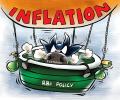
"We have to stand in readiness to go beyond keeping Arjuna's eye to deploying policy instruments, if necessary" to contain inflation, said Reserve Bank Governor Shaktikanta Das on Thursday. Headline consumer price index-based inflation projection for the second quarter of 2023-24 has been revised up substantially, primarily due to the price shock from vegetables, at 6.2 per cent by the RBI form 5.2 per cent estimated in June. Unveiling the bi-monthly monetary policy, Governor Das said the moderation in headline inflation to 4.6 per cent in the first quarter of 2023-24 was in line with the projections set out in the June MPC meeting.
IIP, inflation numbers bring cheer, but their sustainability is the key.

India's services PMI recovered from its ten-month low in September to reach 58.5 in October supported by strong expansions in output and new business, which in turn boosted job creation, a monthly survey said on Wednesday. The seasonally adjusted HSBC India Services Business Activity Index increased from 57.7 in September to 58.5 in October, as robust sales pipelines and strong demand conditions supported the upturn in business activity. In the Purchasing Managers' Index (PMI) parlance, a print above 50 means expansion, while a score below 50 denotes contraction.
The 30-share Sensex ended 209 points down at 20,282 after hitting an intra-day low of 20,262 and the 50-share Nifty ended 61 points down at 6,018 after touching an intra-day low of 6,012.
The broader markets too ended weak- BSE Midcap and Smallcap indices fell by nearly 1% each.

Power Grid, HCL Technologies, Asian Paints, Hindustan Unilever, Maruti and Nestle were among the laggards. Shares of HCL Technologies were trading over 1 per cent lower even after the company reported a 7.6 per cent year-on-year rise in June quarter net profit on the back of new order wins.

India's consumer price index (CPI)-based inflation could ease in the coming months thanks to the arrival of kharif crops, lower international commodity prices, and a pass through of lower input costs to consumers, the finance ministry said in its Monthly Economic Review (MER) for October, which was released on Thursday. The MER, however, warned that the global macroeconomic situation remained precarious and a recession in many advanced economies would impact India's exports. "Easing international commodity prices and new Kharif arrival are set to dampen inflationary pressures in the coming months.

Retail inflation, based on Consumer Price Index, was at 10.36 per cent in May.
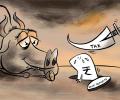
The government's step could push investors to choose riskier equity, or to fall back on bank deposits, thereby negatively impacting the debt market which actually needs to grow, points out T N Ninan.

In January, consumer price index-based inflation rose for the fourth consecutive month. It stood at 10.78 per cent, against 10.56 per cent in December.

The risk-reward for the Indian markets, Morgan Stanley said, is turning favourable.
Consumer durables shrank year on year, which could suggest to observers that spending confidence is yet to return to the economy.

The rupee depreciated by 37 paise to close at 79.62 against the US dollar on Thursday despite sustained foreign capital inflows and a positive trend in equities. At the interbank foreign exchange market, the local currency opened at 79.22 and saw an intra-day high of 79.22 and a low of 79.94 against the American currency. It finally ended at 79.62, down 37 paise over its previous close of 79.25.

Falling food prices notwithstanding, consumer inflation will remain high during the current fiscal because of high cost of housing and services as well as the increasing inflationary pressures from smaller cities, Goldman Sachs said in a report on Tuesday.

The government has revised the wages for unskilled manual workers under the national rural employment guarantee scheme by indexing it to inflation, Rural Development Minister Vilasrao Deshmukh said.

A careful reading of the national income accounts suggests that after a strong recovery from the pandemic, there has been a significant ebbing of dynamism over the last three quarters to more modest levels recently, note Arvind Subramanian and Josh Felman.

'If it doesn't, it will continue with measures to infuse liquidity, signalling a new cycle,' predicts Tamal Bandyopadhyay.
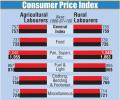
In case of rural workers, the index recorded an increase between 1 to 7 points in 12 States, and a decrease between one to 8 points in 8 states.

Finance Minister Nirmala Sitharaman on Wednesday said the country's economic growth remains a priority for the government, as inflation has come down to a manageable level. Job creation and equitable distribution of wealth remain the other focus areas, she said at India Ideas Summit. "Some of course are red-lettered (priorities), some may not be. Red-lettered ones would of course be jobs, equitable wealth distribution and making sure India is moving on the path of growth.
His comments poured cold water on hopes that the central bank may have a rethink on rates after the wholesale price index, the main inflation gauge, rose a lower-than-expected annual 7.25 per cent in June, its slowest rise since January, helped by moderation in fuel prices.

From the 30-share Sensex blue-chip pack, Titan, Adani Ports, UltraTech Cement, Tata Consultancy Services, NTPC, Bharti Airtel, Tech Mahindra, Infosys, Hindustan Unilever and JSW Steel were the biggest laggards.
Consumer price inflation touched a nine-month high of 11.24 per cent last month.
.jpg)
Declining prices of food items like vegetables pulled down retail inflation to 5.59 per cent in July, bringing it back within the RBI's comfort zone after two months, official data showed on Thursday. The retail inflation based on the Consumer Price Index (CPI) had remained above 6 per cent during May and June. The government has mandated the RBI to maintain retail inflation at 4 per cent, with a margin of 2 per cent on either side. The CPI based inflation stood at 6.26 per cent in June 2021 and 6.73 per cent in July 2020.

The Reserve Bank of India on Thursday raised its inflation projection to 5.1-4.7 per cent for the second half of the current fiscal on the back of spike in prices of vegetables such as onion and tomatoes.

The ministry of labour & employment on Friday announced a hike in variable dearness allowance for more than 1.5 crore workers in the central sphere by Rs 105 to Rs 210 per month. The hike, which will be effective from April 1, 2021, will also result in an increase in rate of minimum wages for central sphere employees and workers. It will be for scheduled employment in central sphere and applicable to the establishments under the authority of central government, Railway administration, mines, oil fields, major ports or any corporation established by the central government. These rates are equally applicable to contract and casual employees/workers.

The RBI expects inflation in 2015 to hover around 6 per cent -- its target for January 2016 -- and sees risks to the target evenly balanced.
According to data released on Thursday, Wholesale Price Index-based inflation rose to seven per cent in October from 6.46 per cent in September.
The food-price segment in the WPI has been growing at 8.3 per cent, much higher than the rise in the index for manufactured articles. In fact, segments like minerals and fuel have witnessed a decline in the WPI and have pulled the inflation down. The rise in food prices affects the common man more than the increase in prices of any other item.

Ahead of Diwali festival, the Union Cabinet on Wednesday increased the dearness allowance (DA) and dearness relief by 4 per cent effective July 1, 2022, benefiting 41.85 lakh central government employees and 69.76 lakh pensioners. The additional instalment of DA and dearness relief (DR) is an increase of 4 per cent over the existing rate of 34 per cent of basic pay/pension. The combined impact on the exchequer on account of both DA and DR would be Rs 12,852.5 crore per annum, said Information and Broadcasting Minister Anurag Thakur while briefing reporters about the decisions of the Union Cabinet.

Citing the sharp rise in food prices, economists at a foreign bank have forecast a steeply higher retail inflation print for July, pegging it at 6.7 per cent, up 190 basis points from the previous month. Deutsche Bank India economists led by chief economist Kaushik Das, in a report on Monday ahead of the monthly inflation print and the Reserve Bank's monetary policy review, said that the July consumer price-based inflation index (CPI) is likely to print at 6.7 per cent on-year as against 4.8 per cent in June. The Reserve Bank is widely believed to leave the key interest rates unchanged for the fourth time in its upcoming bi-monthly monetary policy decision on August 10.
While the average CPI hovers at 10 per cent for five years now, our tax benefits are almost a decade old.

The wholesale price-based inflation hovered over seven per cent through 2012, down from 10 per cent inflation seen in the previous year, reflecting the impact of tight money policy of the Reserve Bank of India.
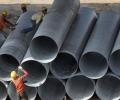
The festive season will mean business for the steel industry as it is the time when automotive and consumer appliance companies bump up demand to prepare for higher sales, experts have said. Ranjan Dhar, chief marketing officer at ArcelorMittal Nippon Steel India (AM/NS India), said that bookings by auto and consumer appliance industries are 20 per cent higher ahead of the festive season compared to last year. "While this could be for a couple of months, it could normalise later at approximately 10 per cent," he said.

Retail inflation moved up marginally to 10.36 per cent in May on account of increase in prices of vegetables, edible oils and milk.

Days before Diwali, the monthly economic review by the finance ministry has highlighted moderation in urban demand, softening consumer sentiments and limited footfall as areas that need to be watched. In its review, released on Monday, the ministry also noted the early signs of artificial intelligence displacing workers, as described in anecdotal reports. The commentary from several large consumer goods companies, including Nestl India, Hindustan Unilever, and ITC, in their recent quarterly earnings, has been around a sluggish urban demand. Rural consumption, however, has mostly seen a revival, the companies pointed out.
The Consumer Price Index based inflation was at 10.91 per cent in February.
 © 2026 Rediff.com - Advertise with us - Disclaimer - Privacy Policy - Sitemap - Feedback - About us - Terms of use - Grievances